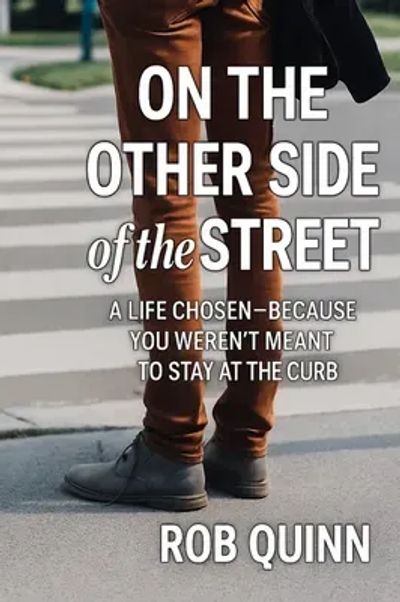
The Book
On the Other Side of the Street
The Story Behind the R4 Style Framework
There are moments in life when everything changes direction.
A diagnosis.
A loss.
Addiction and recovery.
A shift in identity.
Life continues.
But it no longer looks the same.
In those moments people often find themselves standing in a place they never expected to be — uncertain about what lies ahead and unsure how to move forward.
On the Other Side of the Street is a reflection on what happens next.
Not the crisis itself.
But the journey that follows.
The slow and often uncertain process of rebuilding life after disruption.
The Story Behind the Framework
The ideas behind the R4 Style framework did not begin as theory.
They emerged from lived experience.
Over the course of many years, I navigated several profound life disruptions, including:
• serious illness
• addiction and recovery
• grief and loss
• the loss of a professional identity
• the long process of rebuilding life afterward
These experiences altered the direction of my life in ways I had never expected.
Eventually they led to a deeper question:
What does it mean to rebuild life once everything has changed?
Through reflection on that journey, a pattern gradually began to appear.
People navigating very different disruptions often described remarkably similar stages in their lives.
Moments of clarity.
The work of recovery.
The development of resilience.
The emergence of reinvention.
Those observations eventually became the foundation of the R4 Framework.
But before it became a framework, it was a story.
That story became the memoir:
On the Other Side of the Street
The Crossing
At the heart of the book is a simple metaphor.
The curb.
The crosswalk.
The other side of the street.
The curb represents the moment life changes.
The crosswalk represents the journey forward — the space where recovery and resilience develop.
The other side of the street represents the life that gradually takes shape as people rebuild identity and direction.
Many stories about change focus on dramatic turning points.
But the truth is that transformation rarely happens all at once.
Most of the meaningful work unfolds quietly.
In the middle.
In the crossing.
The book explores that space.
The Journey
On the Other Side of the Street reflects on the lived experience of navigating:
• serious illness
• addiction and recovery
• grief and loss
• identity disruption
• rebuilding life after major transitions
Through these experiences, the story traces the gradual movement from Rock Bottom toward Recovery, Resilience, and Reinvention.
The journey is not presented as a formula or prescription.
Instead, it reflects the reality that rebuilding life often happens slowly.
Step by step.
Across the crossing.
Why This Story Matters
Although every life story is unique, many people navigating disruption recognize something familiar in this journey.
Moments when life changes direction.
The uncertainty that follows.
The gradual process of rediscovering footing and direction.
Different circumstances.
Similar crossings.
On the Other Side of the Street offers language for that experience.
The Next Chapter
The reflections that began in On the Other Side of the Street continue through the R4 Style platform and the forthcoming companion book:
Over Here
While On the Other Side of the Street explores the experience of crossing — rebuilding life after disruption — Over Here examines what it means to live fully after survival.
It asks a different question.
Once the crossing has been made, how do we continue shaping a meaningful life?
Together these books form the narrative foundation of the R4 Style framework.
Read the Book
If you have ever found yourself standing at the curb — wondering what life might look like after disruption — this story may feel familiar.
It is an invitation to recognize the stages of the crossing and to remember that life can take shape again on the other side of the street.