There are moments in life when everything changes direction.
A diagnosis.
A loss.
Addiction and recovery.
A shift in identity.
Life continues.
But it no longer looks the same.
Many people eventually reach a moment like this — a moment when the path they expected quietly disappears and the future begins to feel uncertain.
In R4 Style, that moment is often described through a simple image:
The curb.
The crosswalk.
The other side of the street.
This metaphor became the foundation for the R4 Style framework.
But before it became a framework, it was simply an experience.
The experience of rebuilding life after disruption.
The memoir On the Other Side of the Street reflects on the lived journey that inspired the R4 Style framework.
Rather than focusing only on moments of crisis or dramatic transformation, the story explores something quieter and often overlooked:
The middle.
The crossing.
That uncertain space between the life that once existed and the life that gradually begins to take shape afterward.
The book reflects on the slow and often complicated process of rebuilding identity, resilience, and direction after life changes course.
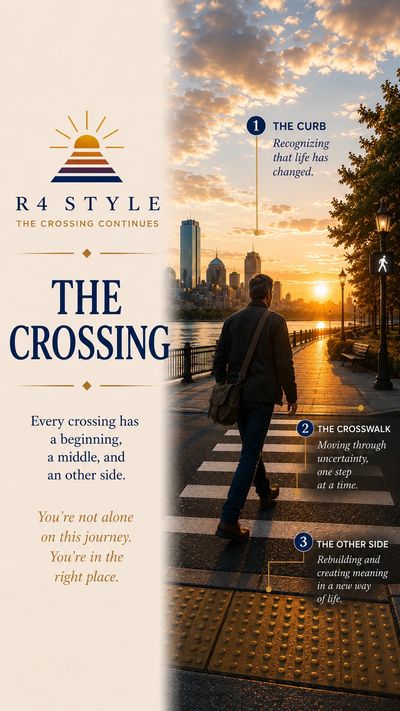
At the heart of R4 Style is a simple and familiar image.
The curb represents the moment life changes.
It may arrive through illness, addiction, grief, loss, or another disruption that alters the direction of a life.
The crosswalk represents the journey forward — the place where recovery begins, resilience develops, and new direction slowly emerges.
The other side of the street represents the life that gradually takes shape once people have begun rebuilding identity and purpose.
Most conversations about change focus on the beginning or the outcome.
R4 Style focuses on the crossing.
Because that is where most of the real work happens.
While reflecting on his own journey, Rob Quinn began to notice something important.
The stages he experienced while rebuilding life were not unique.
People navigating very different disruptions often described remarkably similar phases.
Moments of collapse or clarity.
The work of recovery.
The strengthening that follows lived experience.
The emergence of a new chapter.
Over time those observations became the foundation of the R4 Framework:
Rock Bottom
Recovery
Resilience
Reinvention
Although every story is different, many people navigating disruption recognize these stages within their own lives.
The story behind R4 Style resonates with many people navigating moments when life changes direction.
Readers often include those experiencing:
• illness or major health transitions
• addiction recovery
• grief and loss
• career disruption or burnout
• identity shifts
• unexpected life turning points
Although the circumstances may differ, the process of rebuilding life often follows a recognizable path.
Different experiences.
Similar crossings.
If you have ever found yourself standing at the curb — wondering what life might look like after disruption — this story may feel familiar.
On the Other Side of the Street reflects on the lived journey behind the R4 Style framework and the gradual process of rebuilding life after disruption.
At some point in life, many of us find ourselves standing at the curb.
The life we expected has shifted.
The future may feel uncertain.
But the crossing continues.
And sometimes the most important discoveries appear while we are still walking across the street.
R4 Style
Rock Bottom • Recovery • Resilience • Reinvention
R4 Style is a lived framework for navigating life after disruption—moving from
Rock Bottom through Recovery and Resilience toward Reinvention.
© Rob Quinn | R4Style.com